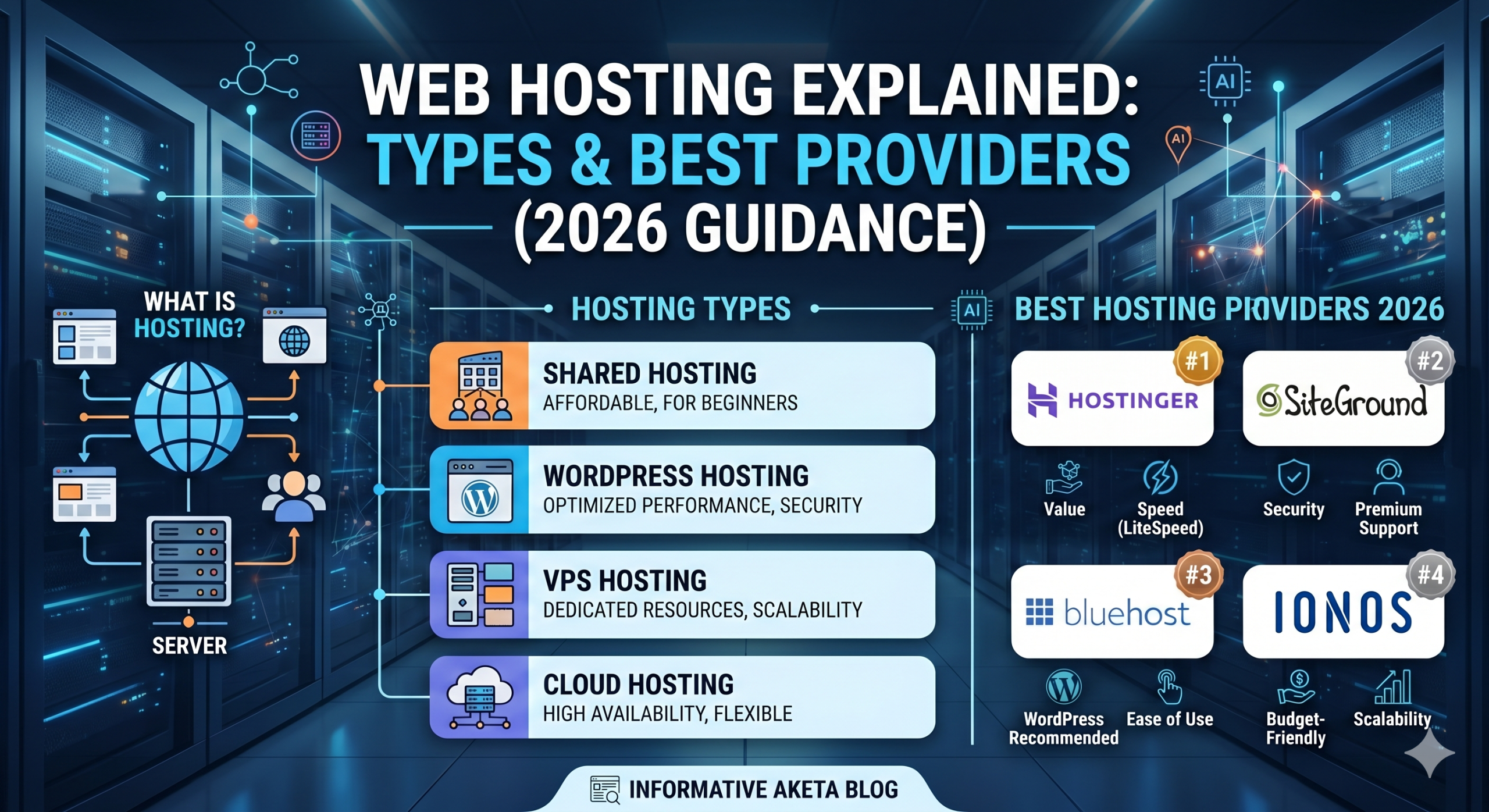
Choosing the right web hosting infrastructure is the single most important technical decision you will make for your digital presence. In 2026, web hosting has evolved far beyond raw storage space and simple data transfers. With search engine algorithms penalizing slow websites and modern users demanding near-instant page loads, your hosting provider dictates your search engine optimization (SEO) performance, user experience, and overall conversion rates.
Today’s premium web hosts integrate advanced server-side caching, automated AI site management, high-performance NVMe storage, and global edge networks natively into their systems. This comprehensive guide covers the technical parameters of server evaluation and provides a deep-dive analysis of the Top 10 Best Web Hosting Providers in 2026, ranked by reliability, affordability, and high-uptime infrastructure.
Technical Metrics: How Server Architecture Is Evaluated
Before analyzing specific providers, it is vital to understand the key technical indicators that differentiate high-performing server architecture from underpowered setups:
1. Time to First Byte (TTFB)
TTFB measures the exact duration from the millisecond a browser sends an HTTP request to your server to the millisecond it receives the very first byte of data back. A stellar TTFB is under 200ms. Slow processing arrays or poorly optimized PHP stacks stretch TTFB past 600ms, which directly compromises your Core Web Vitals and causes search engine crawl rates to decline.
2. High-Availability Uptime Calculations
Uptime is the percentage of time that a hosting server remains fully operational and accessible to the public. Web hosts typically advertise a $99.9\%$ or $99.99\%$ uptime guarantee. To put this in perspective over a standard calendar year ($365 \text{ days}$), the mathematical threshold of allowed downtime is tight:
- 99.9% Uptime: Permits up to $525.6 \text{ minutes}$ ($8.76 \text{ hours}$) of total unscheduled downtime per year.
- 99.99% Uptime: Permits a maximum of only $52.56 \text{ minutes}$ of total unscheduled downtime per year.
3. Storage I/O Speeds
Legacy mechanical Hard Disk Drives (HDDs) are obsolete. Modern hosting demands Solid State Drives (SSDs) or enterprise-grade NVMe (Non-Volatile Memory Express) storage arrays. NVMe drives transfer data up to 10x faster than traditional SATA SSDs, allowing database-heavy content management systems like WordPress to compile dynamic queries instantly.
Summary Comparison Matrix of the Top 10 Providers
The following matrix provides a technical breakdown of the top 10 web hosting providers available in 2026:
| Provider | Core Strength | Starting Price | Storage Tech | Uptime Guarantee |
| 1. Hostinger | Overall Value & Speed | ~$2.69/mo | Ultra-Fast NVMe | 99.90% |
| 2. IONOS | Scalability & Low Entry Cost | ~$1.00/mo | Enterprise SSD | 99.99% |
| 3. SiteGround | Support, Security & Performance | ~$2.99/mo | Google Cloud SSD | 99.99% (SLA Monitoring) |
| 4. Bluehost | Onboarding & WP Integration | ~$1.99/mo | High-Speed SSD | 99.90% |
| 5. DreamHost | Uptime Guarantees & Transparency | ~$1.99/mo | Optimized SSD | 100% (Shared/Cloud) |
| 6. Kinsta | Premium Managed WordPress | ~$30.00/mo | Google Cloud NVMe | 99.99% |
| 7. ScalaHosting | Isolated VPS Innovation | ~$2.51/mo | 100% NVMe SSD | 99.99% |
| 8. InMotion Hosting | Storage Capacity & Consistency | ~$2.29/mo | High-Volume NVMe | 99.99% |
| 9. Namecheap | Budget Shared & Domain Tools | ~$1.98/mo | Reliable SSD | 100% Shared |
| 10. Liquid Web | Heavy Enterprise Managed Infrastructure | ~$3.50/mo | Custom NVMe Arrays | 100% Real-Time SLA |
Detailed Evaluation: The Top 10 Best Web Hosting Providers
1. Hostinger: The Best Overall Value and Performance Leader
Hostinger is the definitive market leader for users looking for premium performance without enterprise-grade price tags. It seamlessly caters to independent bloggers, small-to-medium businesses (SMBs), and multi-site web operators.
- Technical Infrastructure: Hostinger relies entirely on LiteSpeed Web Servers instead of legacy Apache server architectures. LiteSpeed includes native
LSCachemechanisms that store completely processed HTML pages, minimizing server-side execution demands and keeping page loads under 1 second. - Control Interface: It skips traditional cPanel in favor of hPanel, a proprietary dashboard that features clean layout controls and built-in AI tools for automated site creation and server troubleshooting.
- Features: Features free domain names for the first year, free unmetered SSL certificates, automated daily or weekly backup instances, and comprehensive global data center nodes.
- Pros: Outstanding TTFB metrics, low long-term entry costs, and native AI integration.
- Cons: Does not feature direct phone-based customer service lines (chat and email ticketing infrastructure only).
2. IONOS: The Best Scalable Solution for Small-to-Medium Businesses
IONOS (by 1&1) specializes in secure, geo-redundant hosting structures built to allow scaling businesses to adapt their processing power without changing hosting plans.
- Technical Infrastructure: IONOS uses a localized geo-redundant storage framework. Your account data is mirrored simultaneously across two distinct physical server groupings inside their data centers. If a localized hardware fault occurs, traffic automatically routes to the mirroring cluster without triggering downtime.
- On-Demand Scaling: Users can access on-demand resource adjustments via their dashboard or smartphone app. If your site experiences a sudden traffic spike, you can instantly boost available RAM or PHP memory allocations to maintain operational stability.
- Features: Includes a free domain name, automatic daily server-side backups, Wildcard SSL certificates, and a dedicated 24/7 personal support consultant at no additional fee.
- Pros: Highly affordable introductory rates (~$1.00/mo), geo-redundancy protections, and dedicated account support agents.
- Cons: Standard dashboard UI features a steeper learning curve, and renewal rates are significantly higher than the initial promotional pricing.
3. SiteGround: The Premium Choice for Managed Security & E-Commerce
SiteGround is engineered for e-commerce developers, agencies, and web operators who prioritize rock-solid security, lightning-fast execution, and specialized customer service above all else.
- Technical Infrastructure: SiteGround hosts its entire service infrastructure on the premium tier of the Google Cloud Platform (GCP), unlocking access to Google’s highly optimized fiber-optic global backbones.
- Proprietary Optimizations: SiteGround replaces standard server setups with its custom Ultra-Fast PHP execution engine, which processes incoming query strings up to 30% faster than standard PHP configurations. It also includes centralized multi-tiered caching systems via its native Site Tools management layout.
- Features: Advanced automated daily server backups, daily malware isolation scanning, staging instances for safe code deployment, and pre-optimized staging configurations for WooCommerce.
- Pros: Near-flawless uptime execution, highly secure software environment, and highly rated 24/7 expert technical chat and phone support lines.
- Cons: Tighter storage quotas on shared hosting accounts (typically capped between 10GB and 40GB).
4. Bluehost: The Best Beginner-Friendly Integration for WordPress
Bluehost has maintained an official recommendation from WordPress.org for nearly two decades, making it a reliable choice for beginners and non-technical creators.
- Technical Infrastructure: Bluehost focuses heavily on reducing onboarding friction. It features the proprietary WonderSuite Website Builder, a guided platform that uses AI to construct layouts, map out core functional pages, and pre-configure initial plugin stacks automatically based on your industry goals.
- E-Commerce Options: Across advanced tiers, Bluehost bundles automated marketplace tooling, native product upload panels, and centralized secure checkout funnels powered by WooCommerce.
- Features: Unmetered bandwidth allocations on core tiers, single-click staging access, free global CDN routing integration, and a free domain name.
- Pros: Highly responsive 24/7 telephonic support channels and an intuitive user dashboard.
- Cons: Server performance scales down under severe traffic concurrency spikes compared to LiteSpeed environments; regular pricing increases noticeably at renewal.
5. DreamHost: The Industry Leader in Transparent Uptime Guarantees
DreamHost is a fiercely independent web host that prioritizes plain-English pricing transparency, user privacy rights, and aggressive hardware uptime commitments.
- Technical Infrastructure: DreamHost stands out by offering a 100% Uptime Guarantee backed by its core Service Level Agreement (SLA) on shared and cloud accounts. If your site goes offline for even a single minute outside of scheduled structural maintenance, DreamHost credits your account directly for the downtime.
- Control Architecture: Rather than licensing cPanel, DreamHost utilizes an in-house custom control panel. It is completely streamlined, eliminating unnecessary upselling menus to give users quick access to databases, SFTP structures, and domain zone files.
- Features: Free privacy protection for your WHOIS domain information, automated daily backups, unmetered bandwidth, and an open 97-day money-back guarantee.
- Pros: Industry-leading money-back guarantee window, true 100% uptime architecture, and no unexpected price jumps during renewal periods.
- Cons: Live chat agents are bound to specific business time zones, and its custom control panel can require adjustment for long-time users of cPanel.
6. Kinsta: The Best Enterprise-Grade Managed WordPress Engine
Kinsta is a luxury containerized managed hosting provider built entirely for medium-to-large corporate websites, heavy traffic publishers, and large scale WooCommerce operations.
- Technical Infrastructure: Kinsta avoids classic shared environments completely. Every single website hosted on Kinsta is deployed inside an isolated Linux software container (LXD) running on the Google Cloud Platform’s premium network tier. Your site gets dedicated CPU cores and RAM that are fully insulated from every other account on the cloud network.
- Performance Monitoring: Includes native Application Performance Monitoring (APM) tools built directly into their modern custom dashboard (MyKinsta). This allows engineers to track down slow database queries, broken API calls, or buggy plugins in real time.
- Features: Built-in edge-caching arrays distributed across dozens of global data locations, automated enterprise DDoS attack mitigation, automatic daily backups, and instant staging deployment.
- Pros: Top-tier processing speeds, zero shared hardware liabilities, and technical engineering support teams.
- Cons: High entry cost thresholds (~$30.00/mo), strict monthly visitor limits, and limits your deployment strictly to the WordPress ecosystem.
7. ScalaHosting: The Best Innovator in Independent VPS Environments
ScalaHosting is ideal for growing sites that need the power and security isolation of a Virtual Private Server (VPS) but want to avoid expensive software licensing costs.
- Technical Infrastructure: ScalaHosting developed SPanel, a lightweight alternative to traditional cPanel. SPanel provides full VPS site management, email setup, and security management without requiring expensive cPanel licensing fees. This allows ScalaHosting to offer managed cloud VPS plans at prices comparable to standard shared plans.
- Security Integration: Every SPanel account includes SShield, a real-time cybersecurity tool that uses machine learning to detect and block 99.9% of inbound automated exploits, malicious code scripts, and brute-force intrusion attempts.
- Features: Fully managed VPS setups, complete structural control customization options, automated remote backups, and any-time money-back guarantees.
- Pros: Cost-effective managed cloud VPS options, lightweight management software, and responsive support assistance.
- Cons: Its documentation libraries can sometimes lag behind software feature updates, and the initial onboarding experience requires a brief learning curve.
8. InMotion Hosting: The Most Consistent Host for High-Volume Data Needs
InMotion Hosting is a highly reliable option for web developers, small corporations, and scaling content creators who require high disk space allocations and steady server response metrics.
- Technical Infrastructure: InMotion features proprietary Max Performance processing zones across its infrastructure, leveraging NVMe storage setups and custom-tuned server stacks to maximize request delivery speeds.
- Resource Allocation: InMotion stands out by offering generous storage allocations even on lower-tier entry plans. They do not limit file counts (inodes) as aggressively as other hosts, making them an excellent choice for database-heavy web builds.
- Features: Access to traditional cPanel and Softaculous deployment managers, free daily backup options, unmetered bandwidth allocations, and a comprehensive 90-day money-back guarantee policy.
- Pros: Generous storage limits, reliable server performance, and solid backup routines.
- Cons: High-tier performance optimizations are locked behind advanced plans, and accounts must pass a rigorous security verification process before activation.
9. Namecheap: The Best Budget-Friendly Option for Early-Stage Websites
Namecheap is a world-class domain registrar that also provides reliable, value-driven shared hosting options for early-stage websites and portfolio managers.
- Technical Infrastructure: Namecheap runs on stable, secure Apache server architectures optimized with custom operating system configurations. This keeps system resource usage low, allowing them to offer hosting plans at highly competitive prices.
- User Interface: Relies on the industry-standard cPanel and Softaculous apps installer. This ensures complete compatibility, making it easy to migrate existing site files or take your data to another host in the future.
- Features: Free unmetered website migrations, built-in cloud storage backup points, unmetered bandwidth allocations, and an AI-driven layout tool.
- Pros: Low entry costs, unmetered data transfers, and a clear user management control center.
- Cons: Free SSL certificate validation is only included for the first year on standard plans, and backup frequencies are lower on entry-level options.
10. Liquid Web: The Ultimate Provider for High-Traffic Enterprise Infrastructure
Liquid Web caters exclusively to corporations, busy application networks, enterprise agencies, and massive e-commerce stores that cannot afford a single second of downtime.
- Technical Infrastructure: Liquid Web provides premium managed server setups. They do not offer cheap shared hosting tiers. Instead, their engineers build custom dedicated servers, multi-tenant cloud setups, and highly available VMware arrays designed for absolute stability under heavy processing loads.
- The 100% Power & Network SLA: Liquid Web features an aggressive Service Level Agreement that guarantees 100% uninterrupted power and network routing availability. If your system experiences a network routing outage, they provide financial compensation based on the duration of the downtime.
- Features: Fully managed core engineering support, pro-level server hardening protection, daily server-side image snapshots, and specialized internal security monitoring tools.
- Pros: Elite processing power, responsive customer support teams, and highly robust physical server builds.
- Cons: High operational costs make it impractical for simple personal sites or new bloggers.
Deployment Blueprint: Launching a Optimized Site
Once you select your hosting provider, use the following structured blueprint to deploy your website with optimal speed and security configurations:
1.Infrastructure Provisioning:
Select your hosting tier and complete registration. For optimal long-term growth, pick a plan that includes NVMe storage drives and a data center location closest to your target audience.
2.DNS Realignment & Nameserver Mapping:
Claim your free primary domain name. If your domain is registered elsewhere, update its nameserver entries (e.g., ns1.hostingprovider.com) within your registrar dashboard to route incoming traffic directly to your new hosting cluster.
3.Enforcing HTTPS Cryptography:
Before installing any software applications, navigate to your hosting security tab and deploy a free Let’s Encrypt SSL certificate. This enables HTTPS encryption, removes browser security warnings, and secures your initial search engine ranking signals.
4.Application Deployment:
Access the auto-installer menu inside your control dashboard, select WordPress or your preferred CMS, and enter your site details. The system will automatically build the SQL database and configure core folder permissions within seconds.
Definitive Recommendations: Which Provider Should You Pick?
Your hosting choice should directly align with your project’s current scale, operational budget, and technical requirements:
- For Independent Bloggers, Affiliates, and Best Overall Value: Hostinger is the standout choice. Its LiteSpeed server architecture offers premium loading speeds at a highly accessible price point.
- For Non-Technical Beginners and Guided Creations: Bluehost provides a smooth onboarding experience with its built-in AI assistant wizards.
- For Growing Businesses and Local E-Commerce Shops: IONOS offers excellent security and flexibility with its geo-redundant storage and on-demand resource scaling.
- For High-Traffic Enterprise Applications and Large Agencies: SiteGround or Kinsta are the clear winners if your budget allows. Their premium setups on the Google Cloud network deliver maximum performance and security isolation.
Conclusion:
Selecting the right web hosting infrastructure is not a decision to be taken lightly. It is the literal foundation upon which your entire digital business, blog, or brand sits. In 2026, where page speed determines search engine visibility and user bounce rates, an underpowered server stack is a liability you simply cannot afford.
As we have broken down in this guide, there is no single “perfect” host for everyone—only the perfect host for your specific needs, traffic volume, and budget:
- For Absolute Best Overall Value: Hostinger remains the undisputed king for standard bloggers, affiliate marketers, and small businesses looking for enterprise-grade LiteSpeed performance at a highly disruptive price point.
- For Tight Budgets & Local Startups: IONOS offers an incredibly stable, geo-redundant entryway that lets you scale up your hardware resources on-demand as your company grows.
- For Mission-Critical Commerce & Premium Performance: SiteGround and Kinsta are the gold standards if your budget allows. Their deep integrations with the Google Cloud Platform premium network offer unmatched isolation, premium uptime, and ironclad security parameters.
- For Complete Peace of Mind: DreamHost stands out with its rare, rock-solid 100% uptime guarantee and pro-privacy business model.
Our Final Recommendation: Assess your expected monthly visitor numbers, identify whether you need a fully managed WordPress environment or custom VPS root access, and lock in a provider that scales with your vision. A great web host doesn’t just keep your site online—it actively accelerates your path to digital success.

Be First to Comment